The mother of all civilizations
16 Dec 2007. Source:
The Times of
India, Shobhan Saxena,TNN
Double-click
any word to see the explanation.
The ruins were so magnificent and sprawling that some people believed that the aliens from a faraway
galaxy had built the huge pyramids that stood in the desert across the Andes.
Some historians believed that the complex society, which existed at that time, was born out of fear and war.
They looked for the telltale signs of violence that they believed led to the creation of this
civilization.
But, they could not find even a hint of any warfare. It was baffling. Even years after Ruth Shady Solis found
the ancient city of pyramids at Caral in Peru, it continues to surprise historians around the world. It took
Ruth Shady many years and many rounds of carbon dating to prove that the earliest known
civilization in South
Americas - at 2,627 BC - was much older than the Harappa Valley towns and the pyramids of Egypt.
Solis, an archaeologist at the National University of San Marcos, Lima, was looking for the fabled missing link of archaeology
- a 'mother city' - when she stumbled upon the ancient city of Caral in the Supe Valley of Peru a few years ago. Her findings were stunning.
It showed that a full-fledged urban civilization existed at the place around 2700 BC. The archaeologist and her team
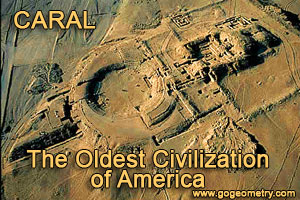
found a huge compound at Caral: 65 hectares in the central zone, encompassing six large pyramids, many smaller pyramids,
two circular plazas, temples, amphitheatres and other architectural features including residential districts spread in
the desert, 23 km from the coast.
The discovery of Caral has pushed back the history of the Americas: Caral is more than 1,000 years older than Machu Picchu
of the Incas. They built huge structures in Caral hundreds of years before the famous drainage system of Harappa and the
pyramids of Egypt were even designed.
But, it was not easy for Ruth Shady to prove this. It was only in 2001 that the journal Science reported
the Peruvian archaeologist's discovery. And, despite the hard evidence backing her, she is still
trying to convince people that Caral was indeed the oldest urban civilization in the world.
"There were many problems, many of them in my own country," says Ruth Shady, on a visit to India to discuss
her discovery with other historians. "The discovery of Caral challenged the accepted beliefs. Some historians
were not ready to believe that an urban civilization existed in Peru even before the pyramids were built in
Egypt," she says.
Basically, there were two problems. First, for decades archaeologist have been looking for a
'mother city'
to find an answer to the question: why did humans become civilized?
The historians had been searching for this answer in Egypt, Mesopotamia (Iraq), India and China. They didn't expect
to find the first signs of city life in a Peruvian desert. Secondly, most historians believed that only the fear of war
could motivate people to form complex societies. And, since Caral did not show any trace of warfare; no battlements,
no weapons, and no mutilated bodies, they found it hard to accept it as the mother city.
That's when Ruth Shady stepped in with her discovery. "This place is somewhere between the seat of the gods and
the home of man," she says, adding that Caral was a gentle society, built on trade and pleasure. "This great
civilization was based on trade in cotton. Caral made the cotton for the nets, which were sold to the fishermen
living near the coast. Caral became a booming trading centre and the trade spread," she says.
Caral was born in trade and not bloodshed. Warfare came much later. This is what this mother city shows: great
civilizations are born in peace. Ruth Shady continues to battle for this great truth.
Explore Peru's 5000-year-old
city, Caral
Monday, October 16, 2006: Associated Press by
Leslie Josephs
CARAL, Peru - A sudden wind gust blows eerily
down from rocky Andean foothills, kicking up a cinnamon-colored cloud over
the moonscape of ruins that is the oldest city in the Americas. The sky is a
crisp blue. All around in the Supe River Valley are lush fields of onion and
corn. We are in Caral, three hours and nearly 5,000 years from contemporary
Lima, Peru's bustling capital, and we've spent the last half-hour or so on a
bumpy drive from the coast, along a dirt road blocked periodically by
bleating herds of goats and sheep. Caral made headlines in 2001 when
researchers carbon-dated material from the city back to 2627 B.C. It is a
must-see for archaelogy enthusiasts.
Even though the ruins in the dusty, wind-swept
Supe River Valley don't approximate in majesty the mountains that surround
the famed Inca ruins at Machu Picchu, they are an unforgettable sight under
the glow of a fiery sunset.
Dotted with pyramid temples, sunken plazas, housing complexes and an
amphitheater, Caral is one of 20 sites attributed to the ancient Caral-Supe
culture that run almost linearly from Peru's central coast inland up the
Andes.
The ruins changed history when researchers proved that a complex urban
center in the Americas thrived as a contemporary to ancient Mesopotamia and
Egypt — 1,500 years earlier than previously believed.
But much remains to be discovered about Caral and the Caral-Supe culture
that flourished here for more than a thousand years.
Ruth Shady, a Peruvian archaeologist from San Marcos University, discovered
Caral in 1994, and was stunned by its size and complexity.
"Caral combined size with construction volume, but also it was a planned
city," she says.
Shady and her team continue working at Caral but she also dedicates her time
to promoting the project with Peru's National Culture Institute as a tourist
and educational destination.
Caral received some 21,000 visitors in 2005, up from about 7,000 in 2003,
the Commission for the Promotion of Peru says.
The ruins offer a front-row seat to archaeology in action, as scientists
dust off piles of rock or supervise the reconstruction of a crumbling
pyramid wall that thousands of years ago gleamed red, yellow or white.
The ancient society comes to life with the help of these archeologists, who
make up about half of the site's tour guides along with locals whom they
have trained.
The 163-acre city was the administrative center for a complex civilization.
While only crudely reconstructed, the society's clear class distinctions are
evident in the wide variety of home sizes and neighborhoods.
One complex thought to have housed farmers was partly excavated on the
outskirts of Caral, on a dry and inhospitable patch of land, while a
spacious home for wealthy families was built beside the important and
impressive Huanca Pyramid, with its steep staircases that narrow as they
reach the structure's flat top.
Caral's largest social class was dedicated to agricultural production, Shady
says. Farmers, using irrigation canals, nourished their crops of pumpkin,
squash, sweet potatoes, corn, chili peppers and cotton with the waters from
the Supe River.
Musicians played flutes crafted from pelican and condor skeletons and horns
made from llama or alpaca bones in the city's amphitheater.
Shady has also uncovered evidence of extensive trading. Shrimp and mollusks
from Peru's coast have been found at Caral.
Caral-Supe residents capitalized on the various climate zones they inhabited
by growing a wide variety of foods. The region's agriculture and fishing
industries complemented each other.
"They managed an economy that articulated the productivity" of the various
regions, Shady says.
Painstaking detective work and reconstruction is necessary, as these
archeologists, little by little, uncover a lost world.
The Caral-Supe ruins are far from intact, unlike many of Peru's famed Inca
ruins that date back half a millennium and are scattered throughout Peru's
Sacred Valley in the Andean state of Cuzco.
Machu Picchu in nearby Cuzco is, of course, the country's top tourist
destination. Aspero, another major Caral-Supe site on Peru's central coast,
16 miles from Caral, was discovered in 1905 but its pyramids were thought to
be naturally formed hills. A garbage dump was built on top of it, and as
Shady's team excavates, trash needs to be cleared away.
They have discovered that fishermen from Aspero provided sardines,
anchovies, and other fish for the sprawling culture.
"We're going to be able to learn about the social system, the economic and
political organization, the ideology," Shady said of the excavations
throughout the Supe Valley.
"It's very important because it's the oldest civilization in America. And
for that reason, native peoples see it as a symbol that in America there had
been the same capacity to create civilizations as ancient as in the Old
World."
Tourism increasing to ancient
city in Peru
Friday, September 01, 2006. Source: The
Vancouver Sun, Canadian Press
Tourism is increasing to the ancient Sacred City of
Caral, Peru, which was discovered in 1994 and
is located two hours from Lima.
Archeologists have been working to preserve and restore the site, and that
work will continue.
The city is more than 5,000 years old and is considered to be the oldest
city in the Americas. Located in the Supe Valley, it is easily accessible by
the Pan-American Highway. Machu Picchu,
located in Cuzco, is probably the country's
best-known ancient site, but Caral predates the Incan ruins by several
thousand years.
The structures at Caral include housing, pyramids, plazas, temples and
altars. Farming, engineering, textiles and trade were all part of life
there.
About 7,000 visitors saw Caral in 2003, a number which rose to 15,000 in
2004 and 21,000 in 2005.
After years of painstaking
restoration work, Peru's Caral ruins are to be opened to tourists who are
now being invited to visit the oldest city in the Americas.
Peru opens Caral ruins to tourists
Hundreds of years before the Incas built
Machu Picchu, the Caral civilization was at work on the Sacred City of Caral.
Now Peru's Proyecto Especial Arqueologico Caral-Supe (Caral-Supe Special
Archeological Project) is busily restoring this archaeological treasure, and
it is inviting tourists who visit Lima to come and have a look. Located in
the Supe Valley, the historic site is about two hours north of Lima and
easily accessible by the Pan-American Highway.
Lima, June 21: After years of painstaking
restoration work, Peru's Caral ruins are to be opened to tourists who are
now being invited to visit the oldest city in the Americas.
This ancient archaeological site in the Supe
valley, just under 200 kilometers north of Lima, was settled some 5,000
years ago by one of the continent's oldest civilizations.
First stumbled upon in 1994, the site was
painstakingly restored by archaeologists led by Ruth Shady, whose work
revealed an ancient, majestic city replete with pyramids, temples and
plazas.
This ancient civilization lived off farming and
fishing, and were believed to have a barter system in place. According to
Shady, the Caral civilization was the foundation which led to the
development of the Inca empire 4,400 years later.
"Here in America human beings also had the same
ability as in the old world to create civilizations as ancient as in the old
continent and regarding Peru, as we have already shown, this is the mother
civilization because it gave rise to a cultural process that went on to be
evidenced in Machu Picchu and the Incan empire 4,400 years later," she said.
According to Shady, the discovery of the city
Caral has had a huge impact on studies of urban development and ancient
civilizations. "Caral has changed the knowledge that we had about the urban
development that existed in the world," she said.
Now the Peruvian government is keen to promote
its newly-discovered tourist treasure, and Minister for Foreign Trade and
Tourism Alfredo Ferrero visited the site as part of the strategy.
"What we have come to do today with
archaeologist Ruth Shady, who has been working on this project since 1994,
is to start promoting it as a tourist destination for Peru and for the
world. This is the most ancient civilization in America. Only Egypt and
Mesopotamia come before it in terms of antiquity, and we believe this makes
it worthwhile, when visiting Peru, to have a day to visit this, just three
hours from Lima, and can be done in a round trip," said the Minister.
Visitors are already starting to flock to the
area, with some 43,000 tourists arriving last year alone. But there is still
work to be done to improve infrastructure in the area and step up security
around the site to protect it against looting.
The new government campaign is also hoping to
distribute leaflets and video footage at some of the world's biggest
international tourism fairs to start spreading the word about this ancient
spot.
The Peruvian authorities are also hoping that
the National Cultural Institute will declare Caral a
National Heritage Site.
Bureau Report

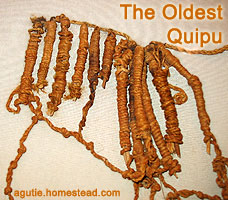
Above: Archeologists in Peru have found a "quipu"
on the site of the oldest city in the Americas, indicating the device, a
sophisticated arrangement of knots and strings used to convey detailed
information, was in use thousands of years earlier than previously believed.
Ruins contemporary with ancient Egypt
Caral made headlines in 2001 when researchers carbon-dated material from the
city back to 2627 B.C. It is a must-see for archaelogy enthusiasts.
Even though the ruins in the dusty, wind-swept Supe River Valley don't
approximate in majesty the mountains that surround the famed Inca ruins at
Machu Picchu, they are an unforgettable sight under the glow of a fiery
sunset.
Dotted with pyramid temples, sunken plazas, housing complexes and an
amphitheater, Caral is one of 20 sites attributed to the ancient Caral-Supe
culture that run almost linearly from Peru's central coast inland up the
Andes.
The ruins changed history when researchers proved that a complex urban
center in the Americas thrived as a contemporary to ancient Mesopotamia and
Egypt — 1,500 years earlier than previously believed.
But much remains to be discovered about Caral and the Caral-Supe culture
that flourished here for more than a thousand years.
A planned city
Ruth Shady, a Peruvian archaeologist from San Marcos University, discovered
Caral in 1994, and was stunned by its size and complexity.
"Caral combined size with construction volume, but also it was a planned
city," she says.
Shady and her team continue working at Caral but she also dedicates her time
to promoting the project with Peru's National Culture Institute as a tourist
and educational destination.
Caral received some 21,000 visitors in 2005, up from about 7,000 in 2003,
the Commission for the Promotion of Peru says.
The ruins offer a front-row seat to archaeology in action, as scientists
dust off piles of rock or supervise the reconstruction of a crumbling
pyramid wall that thousands of years ago gleamed red, yellow or white.
The ancient society comes to life with the help of these archeologists, who
make up about half of the site's tour guides along with locals whom they
have trained.
Complex culture
The 163-acre city was the administrative center for a complex civilization.
While only crudely reconstructed, the society's clear class distinctions are
evident in the wide variety of home sizes and neighborhoods.
One complex thought to have housed farmers was partly excavated on the
outskirts of Caral, on a dry and inhospitable patch of land, while a
spacious home for wealthy families was built beside the important and
impressive Huanca Pyramid, with its steep staircases that narrow as they
reach the structure's flat top.
Caral's largest social class was dedicated to agricultural production, Shady
says. Farmers, using irrigation canals, nourished their crops of pumpkin,
squash, sweet potatoes, corn, chili peppers and cotton with the waters from
the Supe River.
Musicians played flutes crafted from pelican and condor skeletons and horns
made from llama or alpaca bones in the city's amphitheater.
Shady has also uncovered evidence of extensive trading. Shrimp and mollusks
from Peru's coast have been found at Caral.
Caral-Supe residents capitalized on the various climate zones they inhabited
by growing a wide variety of foods. The region's agriculture and fishing
industries complemented each other.
"They managed an economy that articulated the productivity" of the various
regions, Shady says.
Oldest civilization in America
Painstaking detective work and reconstruction is necessary, as these
archeologists, little by little, uncover a lost world.
The Caral-Supe ruins are far from intact, unlike many of Peru's famed Inca
ruins that date back half a millennium and are scattered throughout Peru's
Sacred Valley in the Andean state of Cuzco.
Machu Picchu in nearby Cuzco is, of course, the country's top tourist
destination.Aspero, another major Caral-Supe site on Peru's central coast,
16 miles from Caral, was discovered in 1905 but its pyramids were thought to
be naturally formed hills. A garbage dump was built on top of it, and as
Shady's team excavates, trash needs to be cleared away.
They have discovered that fishermen from Aspero provided sardines,
anchovies, and other fish for the sprawling culture.
"We're going to be able to learn about the social system, the economic and
political organization, the ideology," Shady said of the excavations
throughout the Supe Valley.
"It's very important because it's the oldest civilization in America. And
for that reason, native peoples see it as a symbol that in America there had
been the same capacity to create civilizations as ancient as in the Old
World."
See also:
|