|
Paracas Culture
The Paracas culture was a Pre-Inca society between approximately 750 BCE and
100 CE that developed in the Paracas Peninsula, located in what today is the
Paracas District of the Pisco Province in the Ica Region, Peru.
Most of our information about the lives of the
Paracas people comes from excavations at the large seaside Paracas
necropolis, first investigated by the Peruvian archaeologist Julio Tello in
the 1950s.
The necropolis consisted of multitudes of large
subterranean burial chambers, with an average capacity of about forty
mummies. It is theorized that each large chamber would be owned by a
specific family or clan, who would place their dead ancestors in the burial
over the course of many generations. Each mummy was bound with cord to hold
it in place, and then wrapped in many layers of incredibly intricate,
ornate, and finely woven textiles.
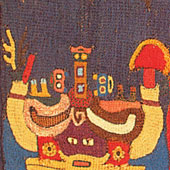
Paracas Textile
Their
textile art is considered as the best of all ancient cultures. They used
vicuņa wool or cotton; harmonious and with many colors, animal designs,
anthropomorphous and geometric, some included feathers.
One of the main reasons why the Paracas Culture
is well known is for the quality of its textiles, especially those belonging
to the "Paracas Necropolis" period, dating from 500 BC and constituting an
exceptionally beautiful expression of this culture.
As from the period of the Spanish conquest, the existence of these textiles,
used as bartering items for diplomatic and military negotiations, as well as
votive offerings in religious ceremonies and death shrouds, has been amply
documented.
It is important to stress that these textiles are constantly associated with
circles of power. The most important rulers owned a greater number of them
during their life, and were buried with a greater number at their death.
Thus they may be considered to be a symbol of wealth. In some religious
rites, textile items were actually "sacrificed", showing their primordial
importance in the Paracas Culture.
Paracas Skulls
The
Paracas employed methods to alter the shape of the skull, elongating it with
weights and boards, to connote social status. Many of the skulls found in
the Paracas Necropolis have stretched and sloped craniums.
The Paracas people also practiced a crude form of brain surgery called
trepanation. Like medieval physicians, who believed bloodletting aimed at
the forehead was a cure-all, Paracas doctors surgically drilled holes in the
skull to treat both physical trauma and, it seems, psychological disorders.
The formation of scar tissue indicates that many of the patients actually
survived the operations, although, of course, it's impossible to say how
their physical or behavioral problems were affected.
See also:
|